Treatment wetlands are generally designed and constructed in a range of hydraulic modes. Wetlands are categorized according to the way water passes through the wetland. Water can pass on the surface or subsurface of the media and be can further be divided into vertical flow or horizontal flow reed beds.
In Vertical Flow (VF) wetlands effluent is uniformly distributed across the surface area of the media in the wetland. The effluent percolates from the surface down to the base of the bed. Various alternatives of VF wetlands are utilized.
With Horizontal Flow (HF) wetlands effluent flows horizontally from the inlet zone across to the outlet zone of the system. The effluent is in continuous contact with the reed bed media where micro-organisms provide treatment. HF wetlands can be designed to operate as surface flow or subsurface flow systems.
Constructed wetlands can also be utilized as Sludge Drying Reed Beds. Both sewage and drinking water sludge can treated with reed beds. Sludge is trapped on the surface of the wetland whilst the majority of the liquor percolates through the sludge residue and the filter media.
Forced Bed Aeration™(FBA™) is recent development in wastewater treatment where wetland performance is enhanced with the addition of air to the system. FBA™ was developed in the USA by Naturally Wallace and can be utilized with both vertical and horizontal flow constructed wetlands. The injection of air to the wetlands can increase the treatment capacity by up to 15 times.
Phragmifiltre® technology provides for full sewer treatment, including sludge management. This technology treats raw unsettled sewage with the use of vertical flow constructed wetlands. No pre-settlement is required. More than 800 Phragmifiltre® systems are in operation throughout Europe. The first one in South Africa will be commissioned in 2021.

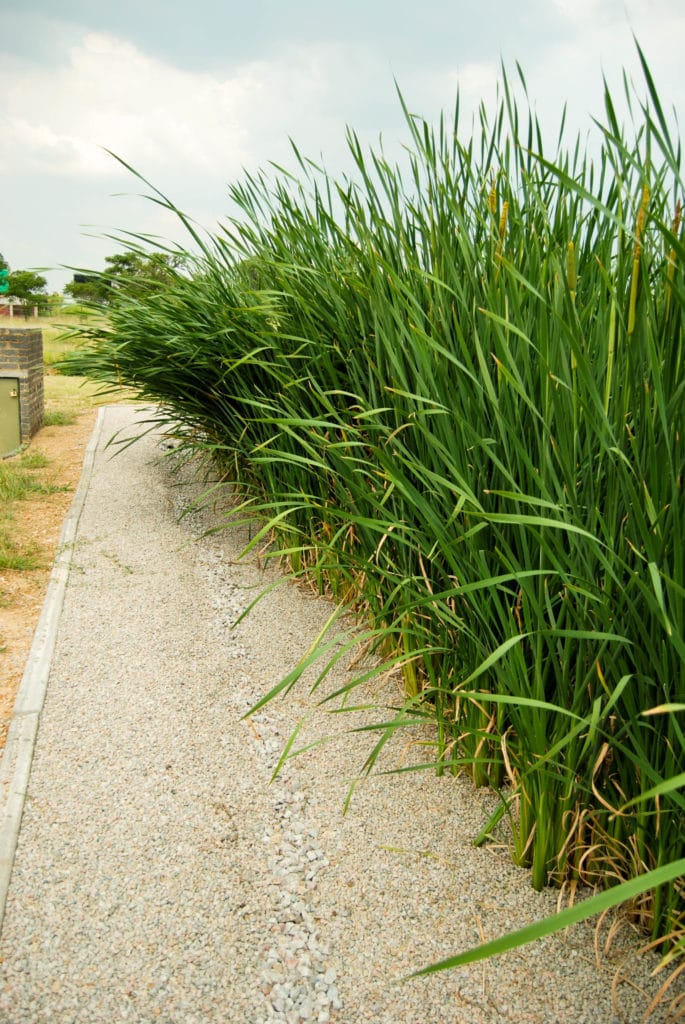
Types of treatment wetlands
Treatment wetlands are generally designed and constructed in a range of hydraulic modes. Wetlands are categorized according to the way water passes through the wetland. Water can pass on the surface or subsurface of the media and be can further be divided into vertical flow or horizontal flow reed beds.
In Vertical Flow (VF) wetlands effluent is uniformly distributed across the surface area of the media in the wetland. The effluent percolates from the surface down to the base of the bed. Various alternatives of VF wetlands are utilized.
With Horizontal Flow (HF) wetlands effluent flows horizontally from the inlet zone across to the outlet zone of the system. The effluent is in continuous contact with the reed bed media where micro-organisms provide treatment. HF wetlands can be designed to operate as surface flow or subsurface flow systems.
Constructed wetlands can also be utilized as Sludge Drying Reed Beds. Both sewage and drinking water sludge can treated with reed beds. Sludge is trapped on the surface of the wetland whilst the majority of the liquor percolates through the sludge residue and the filter media.
Forced Bed Aeration™(FBA™) is recent development in wastewater treatment where wetland performance is enhanced with the addition of air to the system. FBA™ was developed in the USA by Naturally Wallace and can be utilized with both vertical and horizontal flow constructed wetlands. The injection of air to the wetlands can increase the treatment capacity by up to 15 times.
Phragmifiltre® technology provides for full sewer treatment, including sludge management. This technology treats raw unsettled sewage with the use of vertical flow constructed wetlands. No pre-settlement is required. More than 800 Phragmifiltre® systems are in operation throughout Europe. The first one in South Africa will be commissioned in 2021.